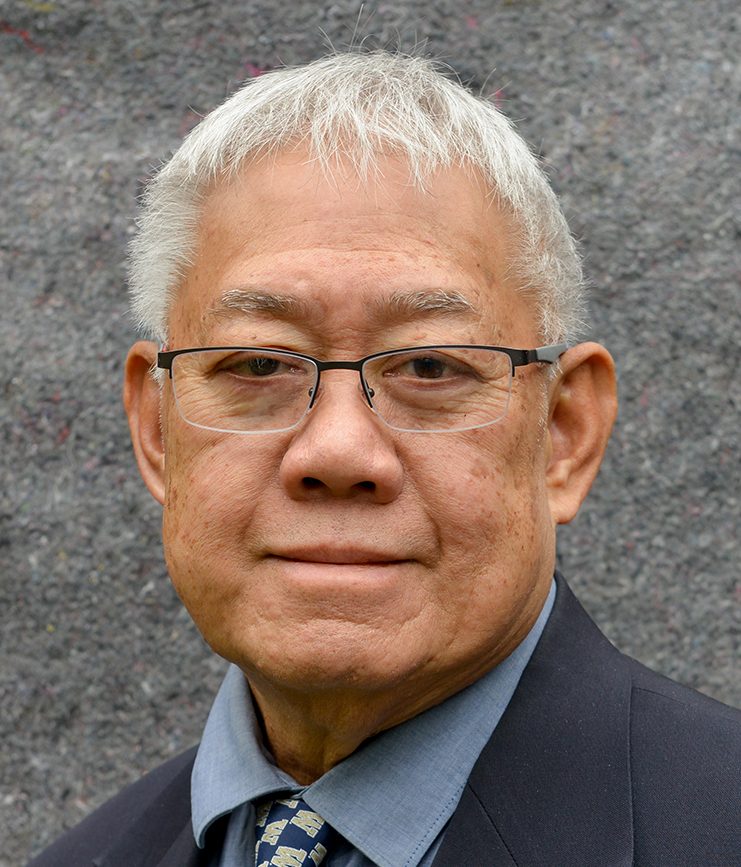

Francisco “Uncle Frankie” Irigon, an activist and Chinatown International District (CID) community leader, died September 12 at 77, after living with heart disease.
Irigon is survived by his wife, Felicita, and their three children and five grandchildren.
Irigon got his start as a student activist in the anti-war and Asian American movements in the 1970s. He was a key leader marching against the Kingdome stadium, which activists warned would devastate the CID, and inspired others to get involved. Irigon subsequently fought for resources to build the future ICHS health clinic in the neighborhood, where he served as executive director. He also co-founded one of the first Asian American community newspapers in Seattle, the Asian Family Affair.
Up until the last years of his life, Irigon continued advocating for the CID, against Asian hate crimes and gentrification, and for equitable placement of a new Sound Transit light rail station in the neighborhood.
“I cannot think of any local Asian American who had continually been an activist for so many decades…since the start of the Asian American Movement,” said Doug Chin, historian and author of Seattle’s International District: The Making of a Pan-Asian American Community, in a statement. “He spoke up for Asian Americans when no one else did. And, his advocacy helped result in many projects, plans and programs that bettered the CID and Asian American community: such areas as decent and affordable housing, health services, food programs, public safety, social services, and affirmative action.”
Asian American and Chinatown International District community leaders, and local politicians, mourned and remembered Irigon as a tireless, outspoken activist and leader.
“We lost an enduring champion of the CID and Asian Pacific American causes,” said Ron Chew, former director of the Wing Luke Museum and the ICHS Foundation, in a statement. “Frankie was one of the most genuine people I’ve ever known. I’ll miss his loud self-deprecating humor, his raw candor, his mischievousness and his willingness to speak truth to power. There was no BS – ever.”
“Frank made sure issues that mattered didn’t go ignored – he spoke up and spoke loudly in pursuit of fairness, opportunity, and justice,” said Seattle Mayor Bruce Harrell in a statement. “While his voice will be missed, we know his legacy will remain here in Seattle.”
Irigon was born in Fort McKinley, a U.S. military base in the Philippines, in 1947. When his father joined the U.S. military and moved to the United States, young Frank and his family followed, immigrating in 1950. The family lived in Kansas and Germany before settling in Fort Lewis, Washington.
Irigon himself served in the U.S. Army from 1965 to 1968, shortly before graduating from high school. In interviews, Irigon recalled witnessing racism in the Army and unequal treatment of officers of color. Irigon was not sent to Vietnam because his duty was almost over during the Vietnam War.
Irigon used the G.I. Bill to attend community colleges, then earned a bachelor’s degree and Masters in Social Work at the University of Washington while working at DSHS. At UW, Frank met his wife Felicita.
As a student, Irigon was active in the anti-war movement while simultaneously serving in ROTC to earn extra money, before ROTC found out about his anti-war activism and expelled him. At UW, Irigon was the first Filipino American to serve on the Associated Students of the University of Washington board.
Irigon was one of six co-founders of the Asian Family Affair (AFA) in 1972, a newspaper expressing ANHPIA community perspectives and stories that were ignored by the mainstream media. Irigon also served as unpaid editor for the newspaper, and wrote for it regularly during its 14 years of publication. His wife Felicita served as the AFA’s Public Relations Representative.
“He was extremely proud of the Asian Family Affair and deservedly so because it was the first Asian American community newspaper in Seattle,” said Chin, who met Irigon in the early 1970s, when Chin was a contributing writer to the AFA.
Irigon was active in demonstrations against the controversial Kingdome stadium on King Street, on the edge of the CID. CID activists worried that an influx of stadium visitors would bring traffic and noise pollution. They also warned that construction of the facility would potentially destroy housing for elderly Filipino bachelors and Chinese immigrants, and contribute to a rise in property values and gentrification, displacing Asian businesses.
“For a full year, the community fought — in the courts and in the political arena — to halt the project. They didn’t succeed,” wrote Chew in an article in the International Examiner last year titled “The two most important Chinatown-ID events everyone forgot about.”
Irigon was one of many demonstrators who disrupted the groundbreaking of the project in 1972.
At a time when the demonstrators were villainized in mainstream media, Irigon ensured that the AFA provided accurate information about the demonstrations, and used the platform of the newspaper to inspire people to take action.
“Not only did we write the news, we made the news,” Irigon recalled in an interview with the Seattle Civil Rights & Labor History Project facilitated by the UW in 2004. “Because news was our demonstrations here, doing other things that the press wouldn’t pick up on. But we needed to put out and let people know that there was movement in our struggle.”
Chew believes Irigon truly found his voice during the Kingdome protests. “During the student movement of the 1960s and 70s, if you wanted to experience a straight-up dose of unapologetic Asian American pride, you sat with him in a meeting and listened to him unleash his torrent,” Chew said. “Frankie illuminated the basic truth that the community journalists can never remain aloof from injustice. With Frankie’s passing, we grieve not only a community champion, but also a brother journalist.”
Soon after, activists staged a march at the Seattle office of the U.S. Department of Housing and Urban Development (HUD), demanding funding to preserve the CID and build new affordable housing.
As a result of the protests, King County delivered mitigation resources for the CID, which helped fund and create major social service organizations.
“From WWII to the 1980s, the CID had the worst housing conditions in Seattle and the highest rate of poverty,” said Chin. “To his credit, Frankie was one of the very few who – for decades – continually fought against projects and situations that negatively impacted the CID while advocating for assistance from the City of Seattle, King County and State to improve conditions in that area, especially services for the poor and elderly.”
Irigon helped secure funding for the International District Community Health Center (now ICHS).
Seeing a need for culturally-competent, healthcare for elders, Irigon and other activists met with King County Executive John Spellman to demand funding for a community health clinic in the CID. Spellman was reluctant at first, but after commissioning an epidemiological study on healthcare needs of CID elders, agreed to help fund ICHS’ first clinic, located on Maynard Ave in the CID. Irigon served as executive director of the organization from 1988 to 1993.
Early in his career, Irigon was one of the first hires at the Washington Department of Social and Health Services Office of Equity and Opportunity tasked with implementing affirmative action, investigating discrimination, and helping minority and women-owned businesses get hired by the state.
CID community leader Maria Batayola first met Irigon when she was hired to take Irigon’s place in this role in the late 1970s. “Back then, civil rights programs and requiring discrimination to be investigated were fairly new,” Batayola said in a statement. “He advocated for equity from the get go and called BS when he saw it.”
Batayola remembers Irigon as an early role model for her when she took the job, which subsequently sparked her 33-year career in civil rights work.
“Frankie was really smart and knew how to navigate government,” Batayola continued. “He was a good organizer. He knew when to stir up our communities to get us to demand what we want. He also knew how to rile up elected officials to get their attention and either stop what they are doing or take much needed action. Frankie spoke so that people understood the anger and frustration of our community members. Kind of like Uncle Bob [Santos], he could diffuse the tension he created by joking, being charming and laughing at his own jokes.”
Chin recalled that Irigon was an assertive advocate for all Asian Americans. “Frankie was a pan-Asian American advocate, an advocate for each and all Asian American ethnic groups,” Chin said.
A resident of Newcastle, Washington for some 38 years, Irigon twice sought a seat on the Newcastle City Council, most recently in 2021, where he lost by a handful of votes.
More recently, Irigon was a founding member of AAPI Against Hate. He was also a member of Transit Equity for All, advocating against placement of Sound Transit’s second CID light rail station on 5th Avenue.
“We know Frankie as a community leader and street activist,” Batayola said. “Frankie was also a very good family man – he was devoted to his wife Felicita and their three children. He wanted his kids to have strong Filipino American identities. He and Felicita had them join the Filipino Youth Activities Drill Team which they both supported for a very long time.”
OCA Greater Seattle – Asian Pacific American Advocates, UW American Ethnic Studies, the UW Office of Minority Affairs & Diversity and the UW Alene Moris Women’s Center are planning a Celebration of Frank Irigon’s Life, tentatively scheduled for October 22.
Learn more about Frank Irigon:
PSARA Oral Histories Project: Frank Irigon
Seattle Civil Rights and Labor History Project
(Editor’s note: Ron Chew and Maria Batayola are both members of the International Examiner board of directors. The board does not determine the content of the newspaper.)