
The 37th Legislative District covers the Chinatown International District, the Central District, and Southeast Seattle through Skyway. It is home to a coalition of Black, Asian, immigrant, and working-class communities that has shaped state policy on tax reform, housing, and civil rights for a generation, and has long served as a proving ground for progressive politics in Washington.
This year, that proving ground is unusually crowded. An incumbent representative is running for the Senate. A first-time challenger is taking on one of the legislature’s most durable figures. And an open House seat is drawing a candidate whose background is unlike anything Olympia has seen from this district before.

The open seat: Jaelynn Scott for House Pos. 2
Jaelynn Scott has never lived anywhere else that felt quite like the 37th. “It’s really been the first place I’ve ever lived where I felt like when I leave town and come back, I feel home,” she said. She calls the district a sanctuary, and means it literally: a place where LGBTQ refugees and immigrants have found “like-minded friends and family and neighbors who are willing to fight” to keep it that way.
Scott is an ordained minister and, for the past seven years, executive director of the Lavender Rights Project, a nationally recognized nonprofit serving Black trans people. Among the wins she points to from that work is helping redirect $16 million in state jail funding into permanent supportive housing.
She didn’t set out to run for office, she said. What moved her was watching community-backed bills get “rushed, deprioritized, moved aside” in back rooms with lobbyists and legislative leadership, from a rent stabilization cap she calls hard to swallow to a wealth tax package she believes would have raised money faster than the capital gains tax that ultimately passed. “This moment is urgent,” she said.
Scott is running against Evon McCorkle, listed as an independent, who could not be reached for comment. With only two candidates filed, the race skips the primary and goes straight to the November general.
If elected, Scott would become Washington’s first Black trans state legislator, and only the second openly Black trans state legislator in the country. “There’s always a series of firsts, but this is significant, especially in this moment,” she said, framing it less as breaking a glass ceiling than as her community finally getting a seat at the table.
Her first priority would be a universal childcare bill with a dedicated revenue stream, developed with labor groups, childcare providers, and the Seattle chapter of the Democratic Socialists of America. She is hoping for a seat on the capital budget and healthcare committees.
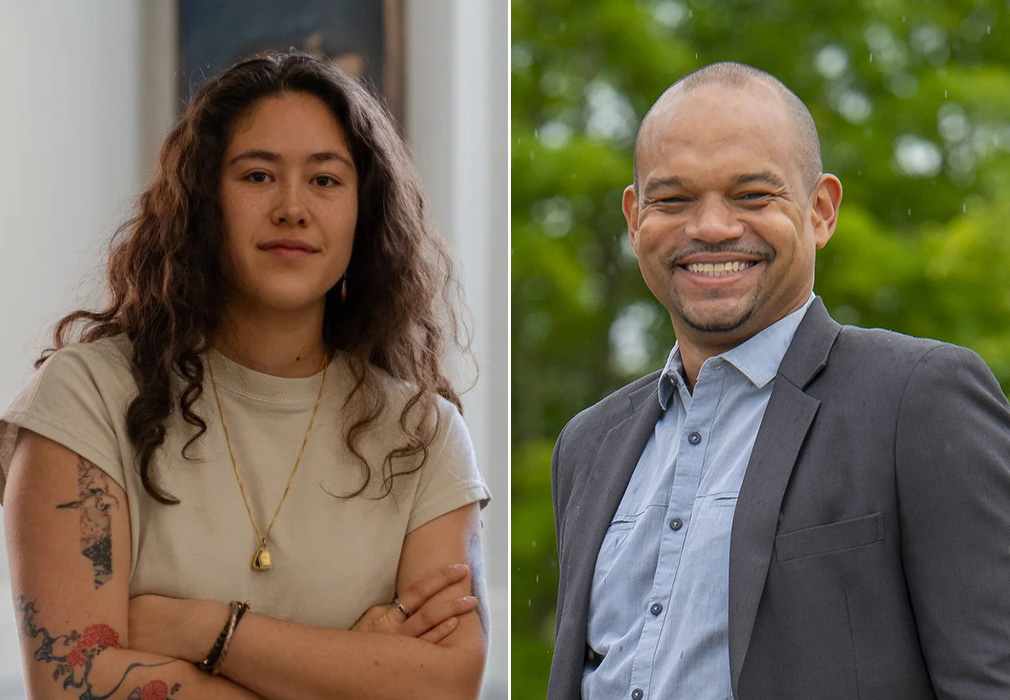
The Senate race: Chipalo Street vs. Tatiana Brown
Chipalo Street is not shy about running on his record. Four years into his House tenure as vice chair of the Finance Committee, he points to the state’s capital gains tax and, this year, the Millionaires’ Tax as proof he can move fast on hard things, calling the latter “a one in one hundred year bill.”
Asked whether Olympia’s pace has matched the crisis facing working families, the same critique Brown has leveled at him, Street didn’t dodge it. “The state for working families has gotten worse over the past six, seven years,” he said, pointing to pandemic-era inflation that “has not come down.” But he counters that rent stabilization and the new taxes prove the legislature is accelerating, not stalling, and argues Brown’s outsider status cuts the other way.
The two took an hour-long walk together early in the race, he said, and came away without finding much daylight between their platforms. “I have not heard any differences between our platforms. I have not found any,” he said, adding that he’s unsure what a freshman senator with no legislative relationships would actually accelerate.
On the federal landscape, Street pointed to a session spent plugging holes: an open courts bill barring ICE from immigration courthouses, a ban on masked ICE agents, and flock camera regulation. He’s now working with the Amalgamated Transit Union, OneAmerica, and the Port of Seattle on a state-specific commercial driver’s license (CDL) after the Trump administration moved to revoke CDLs from immigrants, many of whom do short-haul trucking at the port bordering the district.
New fatherhood, and his current paternity leave, has sharpened his read on childcare. “Just looking at what childcare is gonna cost is wild,” he said. “It’s the cost of a mortgage.”
Street is quick to credit Santos, his House seatmate, calling her “a huge champion” of the CID and pointing to a bill she passed redirecting stadium-area sales tax revenue to Historic South Downtown, which he amended so funding would start in time for this summer’s World Cup matches nearby. Their delegation, he said, has brought roughly $131 million in capital investment to the district.
Tatiana Brown sees the same district and draws a different lesson. A public health and policy researcher trained in collaborative governance, Brown moved to Seattle from Virginia to work alongside the state’s progressive legislative lineage, citing Rebecca Saldaña and the HEAL Act as early inspirations. She decided to run, she said, the same weekend she wrapped her advocacy work on the Environmental Justice Council and learned Saldaña wasn’t seeking re-election.
“I talked to the people that I organized with, and I wanted to see if it was too late for us to try to do something like this, and we all concluded that it’s not too late, and we need to go try,” she said.
Asked to define who she’s running for, Brown didn’t just say her district. She named “communities who have been long excluded from decision-making spaces”: youth, communities of color, working families, women, queer and disabled people.
Pressed on what separates her from Street, she framed it as a difference in how power is held, not just what’s in a platform. She’s committed to serving in the Senate as her only job, full time, year-round, something she said Street “cannot offer.”
Her policy list is dense and specific. She wants to shield the HEAL Act and the roughly $530 million in HEAL funds lawmakers redirected last session to backfill the general budget, and restore automatic funding to the air quality account that lower Duwamish communities in South Park and Georgetown rely on. On revenue, she wants to close the sales tax exemption new data centers get on equipment and labor, noting Microsoft has “pocketed 65%” of existing exemption proceeds, and raise the top real estate excise tax bracket for homes over $3.025 million. “It’s specific, and I think we can do at least half of them,” she said.
On the federal government’s targeting of immigrants, Brown wants Washington to revisit last session’s automatic license plate reader law, which set a 21-day data retention floor that undercut cities like Seattle that had chosen to hold no data at all, and to formally refuse to work with ICE and decommission the detention center in Tacoma. “There needs to be compassion for addressing the harm that’s already been committed,” she said, “and a very clear and concentrated effort among legislators to actually stand up.”
Even as their theories of change diverge, both candidates are staking their campaigns on being genuinely of the place they want to represent: Street raising his young family there, Brown living five minutes from the CID in Judkins Park, where she says she’s “almost every day.”

The incumbent test: Kelabe Tewolde vs. Sharon Tomiko Santos
If any race captures the district’s generational tension, it’s this one. Sharon Tomiko Santos has held House Position 1 since 1998, chaired the Education Committee, and built the institutional relationships that come with 27 years in the same seat. Kelabe Tewolde, an educator at Rainier Scholars for the past eight years and a former Seattle Planning Commission member, is the son of an Eritrean refugee and a first-time candidate arguing that urgency, not tenure, is what the district needs now.
Tewolde traces his decision to run to a single day: floor speeches on the Millionaires’ Tax, the same session in which the legislature cut education spending by roughly $300 million and rolled back an estate tax increase worth an estimated $270 million. “I’m not a math teacher, I’m more of a history teacher,” he said, “but if you’re cutting $300 million in education and also getting rid of $270 million dollars in revenue, that doesn’t make sense.” Tewolde is referencing SB 6347 passed in 2025 which repealed an estate tax change that would have generated over $340 million in revenue over a biennium for the Education Legacy Trust Account, which largely funds K-12 education.
His case against Santos runs hardest through housing. He was among those disappointed she cast the only Seattle-area “no” vote on a watered-down 2025 rent stabilization bill, in a district where he argues a real cap is overdue, citing his own four moves in six years chasing rent he could afford in Columbia City. “If our representative isn’t willing to see how harmful it is for everyday folks, then I think it’s time for a fresh voice in Olympia,” he said.
Asked what he’d want from Santos if he wins, he doesn’t dismiss her tenure outright. “If I win this race, I want to learn from her,” he said, comparing it to the back-and-forth he had growing up with his own elders: “Not a lecture, a conversation.”
Sharon Tomiko Santos leans on experience as substance, not just tenure. Throughout her time in the legislature, she has built a legacy defined by championing social justice and civil rights: from protecting
On rent stabilization, she frames her no vote as a defense of small landlords in a district with a specific history: Japanese American families once barred from citizenship and property ownership, who built modest retirement security managing long-term-stay buildings. “Corporate landlords, I don’t really care about,” she said, arguing that the bill lacked the flexibility smaller owners needed. She’s skeptical rent control works at all, pointing to San Francisco, where she was born. “It has not stemmed the cost of housing,” she said, arguing the real cost drivers are high tech salaries and a Growth Management Act that “artificially inflates the cost of land.”
On education, Santos rejects the premise that Seattle schools are failing, citing a Stanford analysis that ranks the district among the top performers in the country. She argues the deeper fix is “competency-based education,” meeting students at their actual skill level instead of a grade-based pace. And she notes, pointedly, that the Education Committee she chairs “is not where we make the decisions around education funding. That is done in the Appropriations Committee, and I have never served on the Appropriations Committee.”
On her opponent directly, Santos questions Tewolde’s standing to lead on public education, given that he didn’t attend public high school or college and doesn’t currently work in a public school. “I think he has a lot of idealism and enthusiasm, but experience is lacking in the policymaking field,” she said, casting the race as part of a broader generational churn hitting both parties nationally and laying much of the blame for the moment’s incivility on the current president.
Santos is also protective of a different legacy: the state’s Community Preservation and Development Authorities, a designation she created that exists in only two places in Washington, both in the 37th, specifically to keep the CID and Central District from being erased by development pressure. “The International District is like the canary in the coal mine,” she said.
Shared themes and what’s at stake
Across all three races, a few throughlines emerge: housing affordability and displacement sit at the center of every campaign, alongside a shared reckoning with the federal government’s targeting of immigrants, trans residents, and low-income communities.
The August primary will decide who carries these arguments forward, into what is likely to be one of the most consequential sessions in the district’s history.

Evelyn is a writer and community organizer based on Coast Salish lands. Evelyn has 8 years of experience in government and currently works for King County. In their free time, Evelyn can be found singing karaoke and watching anime.