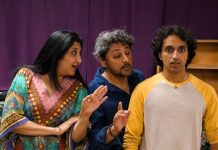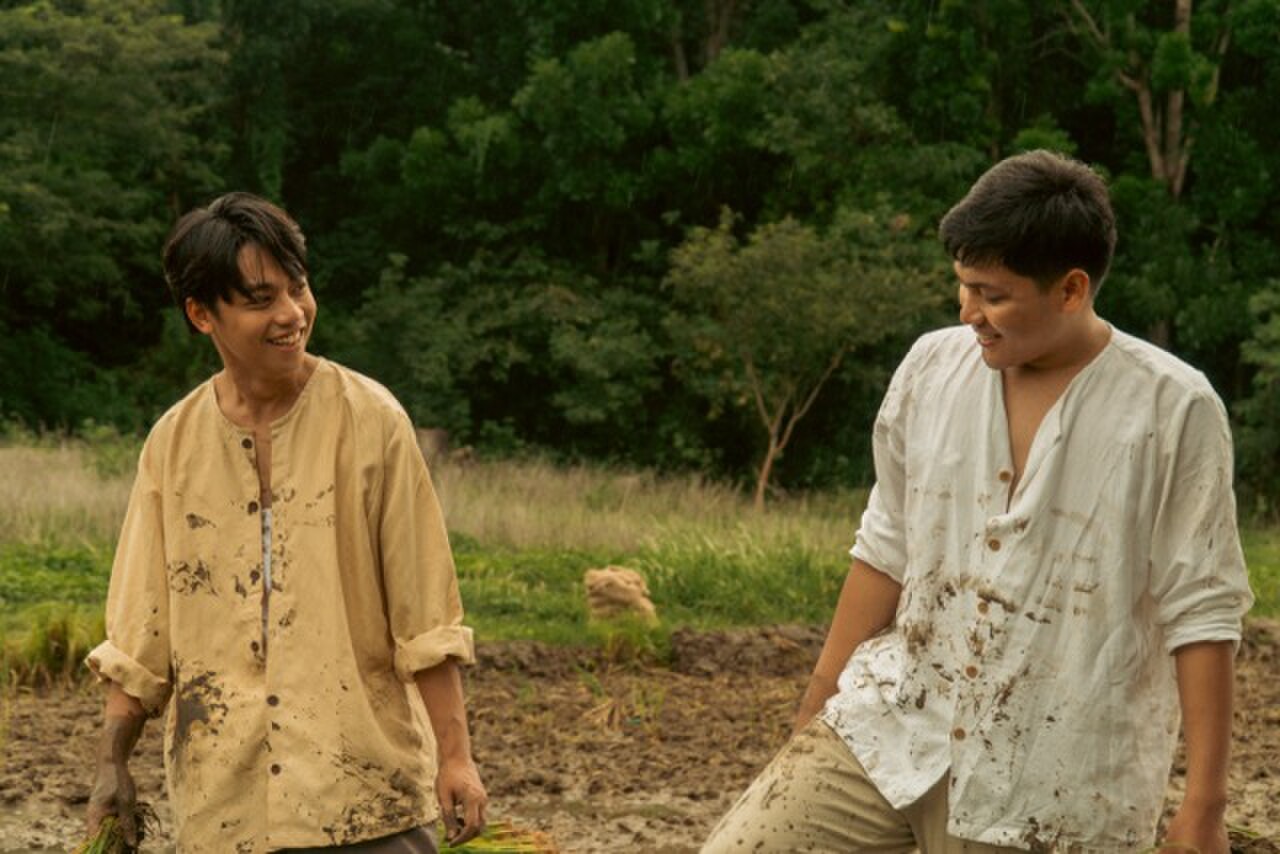
When seven Filipino family members move into a small apartment together while trying to break into show business, what could possibly go wrong? Well, everything!
This year’s Diwa Filipino Film Festival showcases “No Room for Love” as its Centerpiece. Shot in black and white with full color dream sequences, the story moves rapidly from one vignette to another and takes place in LA during four seasons.
During Spring, Fred is neglected by his family, the Santiagos, and gets left behind. When Spring comes, a photo that’s misinterpreted creates chaos. Then, in Fall, Fred’s sister, Sandra, along with Leah are invited to an industry event that turns out badly. By the time Winter rolls around, the family finds itself evicted.
Among other scheduled films is the Closing Night narrative “All the Things I Leave You (Patawid)”, about a long hidden love affair. In all, 42 independent short and feature-length films from both inside and outside the Philippines will be screened. This year’s 12th edition festival also features Q&A’s with several filmmakers.
To learn more about Diwa Filipino Film Festival, International Examiner talked with its director Adrian Alarilla:
International Examiner: What inspired the idea of a Filipino film festival in Seattle?
Adrian Alarilla: The idea actually came from the Organizers of Pagidirwang Philippine Festival. They were looking to diversify their arts showcases as well as make more use of the loft area in the Seattle Center Armory. I was recommended to them and, of course, I readily agreed.
IE: What is the history of your partnership with Pagdiriwang?
AA: The Pagdiriwang Philippine Festival has been held at the Seattle Center starting in 1987, and has since grown into the biggest festival of Filipino arts and culture in the Pacific Northwest. This celebration is a part of Seattle Center Festál, a series of cultural programs sponsored by the City of Seattle. Pagdiriwang provides a venue for Filipinos and non-Filipinos alike to learn about the culture. It is an ideal setting for presenting art, dance, music, history, literature and, with the addition of the Diwa Film Festival, film—in order to promote better understanding of the Filipino cultural heritage.
Diwa was only created in 2014, and that’s when we started partnering with Pagdiriwang. Over the years, we have been thinking of branching out and exploring a different venue, as well as formally organizing ourselves so we could get additional grant funding. We applied for fiscal sponsorship through Shunpike and, starting last year, we received a Sustained Support grant from 4Culture. This year, we also received a C.A.R.E. grant from the City of Seattle Office of Arts and Culture. We did our first standalone film festival last year at Wing Luke Museum, and we’re excited to be back this year!
IE: What does Diwa mean?
AA: Diwa means “spirit” in Tagalog. It can connote an individual’s essence or life force, but it can also connote a collective spirit. I wanted the film festival to celebrate the Filipino spirit wherever it resides, so I decided to name our film festival “Diwa.” I wanted to bring films from the Philippines in conversation with films from the Filipino diaspora, and explore commonalities as well as differences. I wanted to do this in order to bridge the gap between homeland and diaspora, and in turn help foster that collective spirit.
IE: What are some trends you’ve noticed among Filipino films?
AA: One trend I started seeing over the past two years is that the differences between “homeland” filmmakers and “diasporic” filmmakers has started to get a bit muddled. The biggest example I can think of from this year’s lineup is “Kaya” by Filipina-German actress and filmmaker Isabel Lamers who is based in Los Angeles, but shot her film in the Philippines. The story is that of a diasporic Filipino martial artist practicing the Filipino martial art of arnis/escrima, and wanting to be part of the team, but is being underestimated by the head of the team. While it is a martial arts film, it also has themes of identity, belonging and family.
IE: Is there a particular genre of film that you feel Filipino filmmakers are especially gifted at producing?
AA: I’m not sure exactly, but one specific genre I have been seeing being used especially by diasporic Filipino filmmakers is the personal documentary; that is, documentaries about the filmmaker’s life. I think this genre is really interesting because it reveals the evolving Filipino identity in motion showcasing the unique perspectives of Filipinos in the diaspora who often find themselves in between. One particular film this year that I love is xana lenore’s “UNBRAID ~ unravel”, about the filmmaker’s own experience having three mother figures in her life.
IE: What have been some of your favorite films?
AA: I keep saying this every year, but every year is great because I have new favorites, like Randal and Malou Kamradt’s hilarious, touching and absolutely relatable film, “No Room For Love,” which explores the ups and downs of trying to “make it” in the arts, thanks to the support of family. I also love that we are starting to get more local filmmakers, such as Shea Formanes, who made “Diwata”, Xandra Yugto, who made “Mahal”, and Mike Talplacido, who made “Finding Filipinotown”. In previous years, I have also loved Barbara Malaran’s “Dahil Sa ‘Yo: Ang Storya Ng Kilawin Kolektibo (Because of You: A History of Kilawin Kolektibo)”, Redsh Alba’s “Ligawang Malay (We’re Just Sleepwalking)”, and Gab Mejia’s “Baradiya”.
IE: How much of your being a filmmaker has helped you with directing this festival?
AA: Although I try to provide as much variety as possible in each film festival (as in this year’s edition), I think my own personal tastes in film and what films I like to make also kind of informs the films I like to program. I myself love personal documentary, and most of my films are personal documentaries, so I like programming them when I can. I have also written an essay about personal documentary in Philippine independent cinema and Diasporic Filipino cinema.
IE: Tell us a little about your own films.
AA: I love personal documentary. It initially arose out of necessity. I don’t have much of a budget, but I still want to share unique and interesting stories. My first personal documentaries were more experimental in nature, and I played with the notions of truth, reality and perspective. My latest film, “Kung Saan Man Tayo (Wherever We May Be)”, expands my approach by enabling my friends to make the film with me. I was initially curious about how my friends whom I went to school with back in the Philippines have since adjusted to their new homes elsewhere around the world. I initially thought of capturing their experiences myself, but I realized I did not have the budget. Instead, I sent them my video camera and asked them to record their own lives in their new homes. The camera went to Canada, France, Germany, Thailand, Singapore and Australia before returning to me. I sat on the footage for some years while finishing grad school. Then, during the pandemic, I finally found no reason not to finish it. So I finished it while sheltering in place. You can watch my films on my website.
Diwa Filipino Film Festival, October 3-4. Takeuchi Story Theatre at Wing Luke Museum, 719 S King Street. Link to festival schedule: https://diwafilmfest.wordpress.com/2026-festival/